
Electronic Voting Machines & Other Electoral Reforms
During his tenure as a member and later Chief of the Election Commission between 1993 and 2000, Dr. M. S. Gill spearheaded a series of crucial reforms. Special highlights of this period include the establishment of widespread usage of Electronic Voting Machines (EVMs), the digitization of the Electoral Roll and mandatory use of Electors Photo Identity Cards (EPICs), the launch of the Election Commission Website, the introduction of the Time Voucher Scheme for indirect state funding, raising stagnant election expense ceilings and implementing better systems to check expense records, advocating for proxy voting for defense and service staff abroad, and putting checks in place to decriminalize elections.
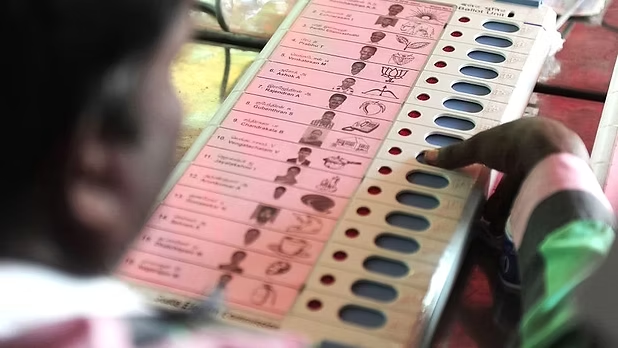
To address electoral fraud and simplify the voting process, the Election Commission of India (ECI) introduced Electronic Voting Machines (EVMs) in the late 1990s. The adoption of EVMs allows for quick vote counting, significantly reduces the cost of elections by eliminating the need for printing millions of ballots and reducing the manpower required for multi-day counting, and importantly, prevents invalid or wasted votes.
A serious concern with paper ballots in India was booth-capturing, where party loyalists would forcibly occupy a polling booth and stuff the ballot box with fake ballots. EVMs were designed to discourage such fraud by limiting the rate of casting votes to five per minute. This restriction drastically increased the time needed to cast false ballots, providing a greater time-frame for security forces to arrive and intervene. The machine also features a “close” button to immediately disable the device if a polling booth is forcibly captured. Furthermore, EVMs enhance transparency, as electronic voting signatures and thumb impressions are maintained in a public register, contrasting with paper balloting where inspection occurred only under court orders and ballot validity was often at the discretion of an election officer.
The journey toward EVM implementation began in 1977 when the EC suggested that the Electronic Corporation of India Ltd. (ECIL), a public sector undertaking, design voting machines suitable for Indian conditions. A prototype was first demonstrated to political party representatives on August 6, 1980. In January 1981, Bharat Electronics Ltd. (BEL), another public sector undertaking, informed the EC that they had also successfully created and tested an EVM in their internal Union elections, where over 12,000 people had voted. Both machines were demonstrated to the EC in April 1981, and then to the Chief Election Officers in July 1981. Subsequently, both organizations collaborated on a single common design.
This combined design was first used in the Kerala Legislative Assembly elections in the Parur assembly constituency in May 1982 across 50 polling stations, and later in ten other constituencies between 1982 and 1983. However, the use of these early EVMs ceased after 1983 due to a Supreme Court petition related to the Parur assembly elections, which stipulated that a specific provision in the law was required for the use of EVMs.
In response, Parliament amended the Representation of People Act, 1951, in December 1988 to legally allow the use of EVMs. Based on the 1982-83 experience, the EC continued to refine the EVM design with the two central undertakings, with the final designs settled in May 1989. This finalized design was then referred to the Electoral Reforms Committee, comprising representatives from various National and State Parties, by the government in February 1990. Though initially satisfied, the committee appointed a technical experts committee to examine the machines further. Based on the experts’ report, the Committee on Electoral Reforms recommended to the government in May 1990 that the machines should be used for all future bye-elections and general elections to the Lok Sabha, State Assemblies, Panchayats, and local bodies.
In December 1995, after the legal framework was established, the EC wrote to all recognized parties to gauge their views on EVM usage. While there was general favor for the experimental introduction of EVMs in select urban constituencies, opposition from at least one National Party and one recognized state party prevented a clear commitment and consensus, putting their use on hold until after the 1996 General Elections.
Discussions on EVMs resumed in a meeting with Recognized State Political Parties on April 12, 1997, but still failed to reach a consensus. The lack of firm, unanimous acceptance may have been influenced by the then recent malfunction of the electronic voting system in Parliament during a crucial vote of confidence a few days earlier.
Despite the hesitation, the Commission took the historic decision to begin using EVMs for assembly constituencies in November 1998. The Commission selected 16 constituencies across Madhya Pradesh, Rajasthan, and the National Capital Territory of Delhi, choosing them based on their urban character, literacy rates, and the availability of logistical infrastructure.
To ensure successful execution, the EC launched a massive public awareness program about the new voting method. This was conducted via state-owned electronic media like AIR and Doordarshan, extensive advertising, and public demonstrations of the machines in strategic locations. New election manuals were created, election staff training was undertaken, and all machines were thoroughly tested, having been unused for a decade.
The first election using EVMs was finally conducted in the 16 selected constituencies on November 26, 1998. Following the election, the EC held multiple discussions with involved election officers at every level to gather feedback, which was largely positive. Consequently, the Commission decided to continue the experimental use of EVMs in the bye-elections held in various constituencies in February 1999.
Building on this success, the commission decided to cover an entire State Assembly election, selecting Goa as the first state for comprehensive coverage in the November 1998 and February 1999 period. This effort involved comprehensive training for all stakeholders, a massive public awareness campaign utilizing Doordarshan, AIR, hoardings, posters, and cable TV, and the implementation of meticulous supervision and monitoring systems. This led to a successful election, and based on this experience, the use of EVMs was scaled up dramatically in the next General Elections of 1999.
By 2004, EVMs were used in all 543 Parliamentary Constituencies for the Lok Sabha elections, marking the complete replacement of the old system of voting with ballot papers by a new, technologically advanced voting system.
More about EVMs on brookings.edu
Dr. Gill on EVMs for Gulf News
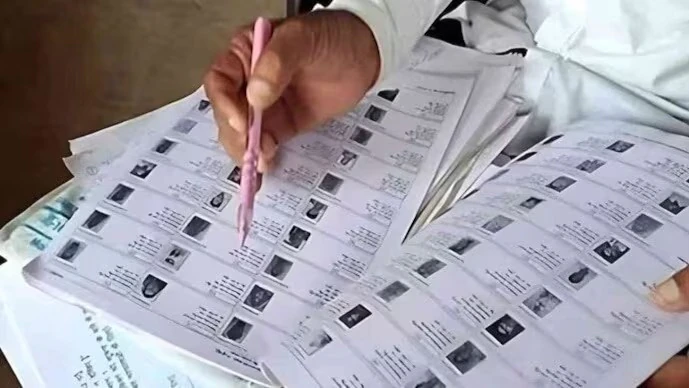
In 1997, the Election Commission of India (ECI) initiated a major overhaul of its electoral roll management system. Noticing inconsistencies—such as individuals who had been issued Electors Photo Identity Cards (EPICs) not appearing on the 1995 revised rolls—the Commission determined that a more organized and modern approach was necessary. The ECI conducted detailed discussions with Chief Electoral Officers (CEOs) and recognized National and State Political Parties to review and align all related activities.
Following this comprehensive review and consultation, the ECI launched several system-wide improvements. The most significant of these initiatives was the decision in August 1997 to implement a nation-wide computerization program to efficiently manage and regularly update the vast and constantly changing electoral rolls.
In a historic 1997 meeting with the Chief Electoral Officers, the Commission reviewed the entire range of issues related to roll revision and systematic management of connected activities. For the first time, a comprehensive agenda note covering all aspects of Electoral Roll Management was prepared and presented.
The new system had to handle not only the high volume of data—over 620 million voters with an annual growth rate of 2%—but also multiple languages. It was also intended to serve as the backbone for the Electoral Photo Identity Card (EPIC) program and the management of all electoral events. The ECI closely monitored the prototyping of the software solution in the Gurgaon district with the help of the Haryana Electronic Corporation. The key change in the Commission’s approach was treating the electoral roll as a dynamic database that could be regularly updated, rather than merely a static printed list.
The EC also worked to standardize the format of the electoral rolls for easier readability and quick location of names by studying and improving upon the formats used across different states. One of the key deliverables was also to ensure that a backup of the relevant database was available as a CD-ROM at the district level and a CD-ROM was available for publication and distribution in each Parliamentary Constituency for public sale. This CD-ROM, containing an exact copy of the printed electoral roll database, could be accessed via a basic internet browser, allowing political parties, citizens, and the election machinery to easily verify the data.
The Election Commission had established a major statutory scheme to provide Electors’ Photo Identity Cards (EPIC) to voters. However, after the 1995 revision, inconsistencies were found between the identity cards issued and corresponding entries in the electoral rolls. To rectify this and formally align the Electoral Roll Management and EPIC issuance programs, the Commission made a landmark decision while planning the computerization: to mandatorily add the unique EPIC Number against every elector who had been issued a card.
This integration served multiple vital purposes. It formally synchronized the programs, cementing the principle that an identity card should only be issued to a registered voter. Crucially, it made the EPIC card portable and universally valid across the entire country, meaning a voter could use the card issued in their first constituency even if they moved to a different one. The elector was thereby provided with a unique, lifetime identification number, marking the first critical step toward full integration of the two schemes. The mechanism devised allowed for the annual addition of new entries for those above the age of 18, positioning the EPIC to potentially function as a national ID document. The EC repeatedly urged the Home Ministry to adopt this approach, arguing that it would only need to be supplemented for those under 18.
In the Haryana Assembly elections of February 2000, the EC, for the first time, made photo identity cards mandatory. While a voter could furnish any of 17 supplementary documents to satisfy the presiding officer of their identity in the absence of an EPIC, a remarkable 80% of Haryana voters produced the EPIC. This established the Haryana model for EPIC usage. Furthermore, the Commission’s compulsory use of the EPIC was established and settled by the Supreme Court on August 17, 2000.
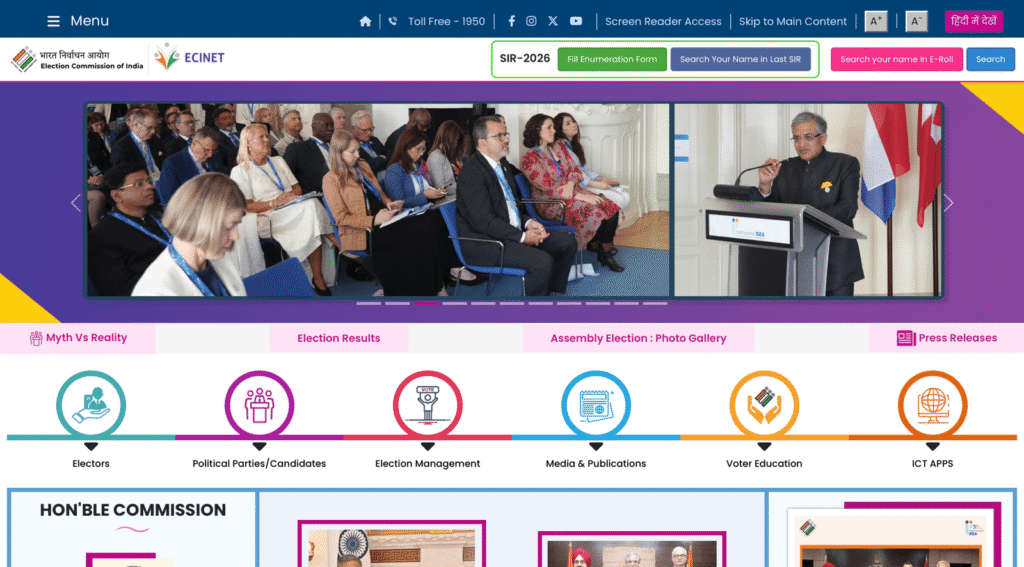
The EC launched the official election website on February 28, 1998, for the quick dissemination of instructions, information, trends, and results. It was designed to be a comprehensive resource center containing election laws, manuals, handbooks published by the EC, and key statistics for elections dating back to 1952. In October 1999, the Commission’s secretariat was directly connected with 1500 counting centers through its communication networks, enabling round-wise results to be posted on the website instantly.
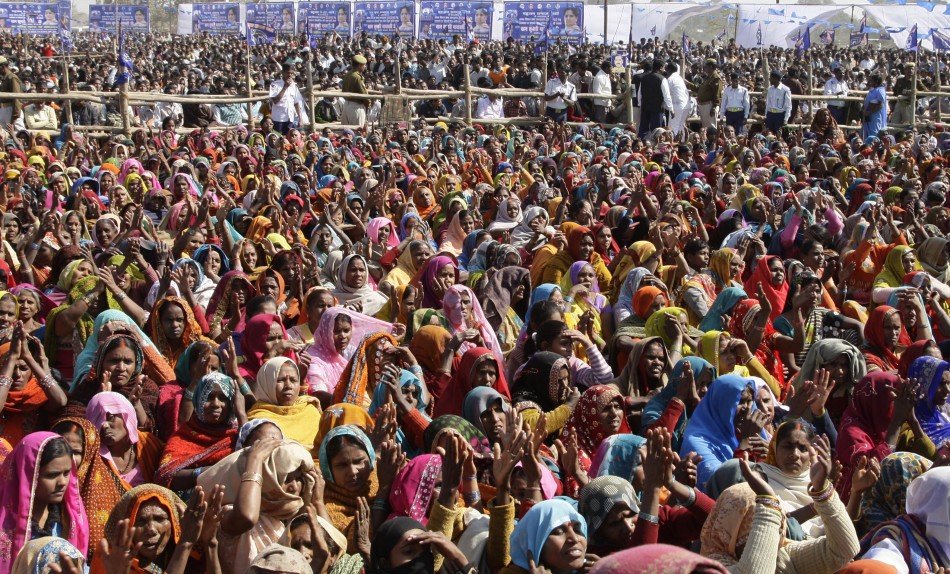
The Election Commission petitioned for the raising of permitted election expenditure for all parties in State and National elections. As a result of this initiative, the limit was raised to ₹15 lakh for Lok Sabha and ₹6 lakh for Assembly constituencies in 1998. The EC under Dr. Gill also proposed that the ceiling for election expenditures should be different for each constituency, accounting for differences in area, population, and demographic changes over the five-year period between two elections. Since the EC maintained the most current data, it was argued that they would be best equipped to set appropriate expense ceilings.
The EC not only pushed for increased election ceilings but also championed a more transparent system for presenting accounts of election expenditure. Following a judgment on April 4, 1996, the EC could now demand detailed information on campaign spending. Candidates were required to submit not only their individual accounts but also the expenses incurred by their parties, friends, and supporters on their behalf. The Commission believed in seeking greater financial transparency and placing limitations on donations, rather than banning them outright. For increased public scrutiny, the EC also proposed that Recognized Political Parties must allow their accounts to be audited under EC direction by specified bodies and that they should publish their accounts annually for public review.
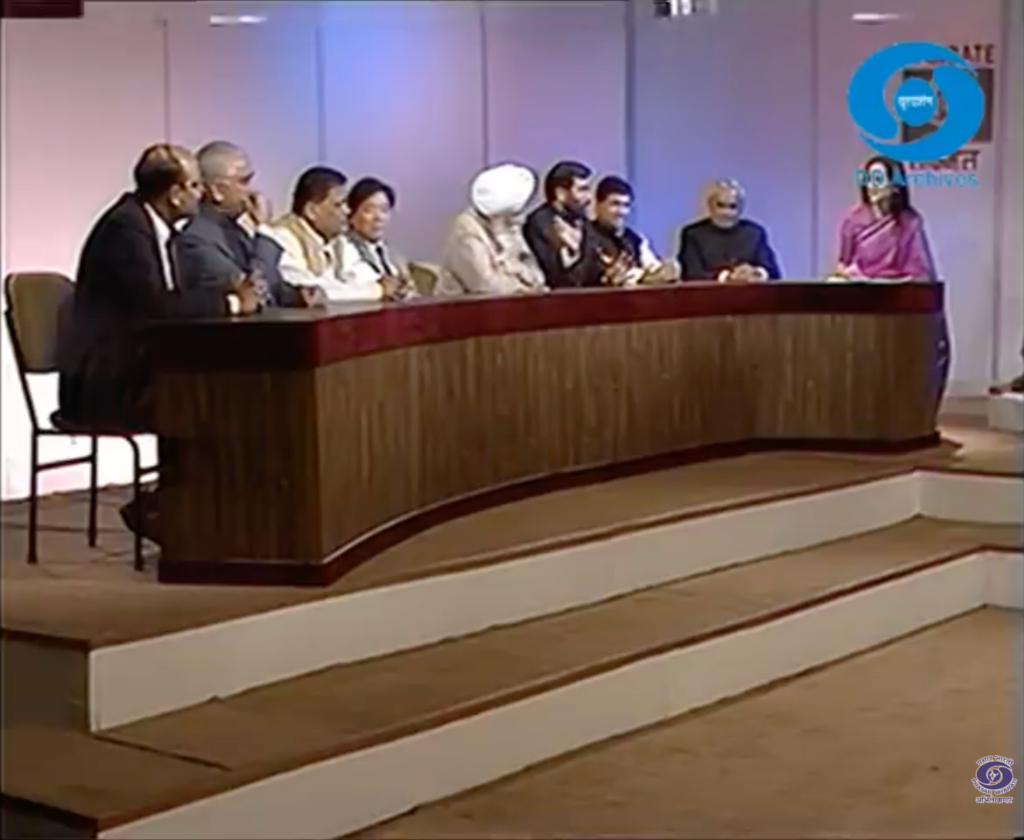
Starting in 1997, substantial measures of indirect state funding of elections were initiated solely at the Election Commission’s proposal through the use of national radio and television. Before 1996, recognized national and state political parties were only provided the facility for one telecast and two broadcasts, each of 15 minutes duration, over Doordarshan and AIR during General Elections. The Commission noted that this was insufficient given the vast population to be covered and the limited campaign period.
Keeping this in mind, the Commission proposed a scheme for state funding of elections by providing extensive free time for broadcast and telecast over the state-owned electronic media to recognized political parties. This scheme, popularly called the ‘Time Voucher Scheme’, was discussed by the commission with recognized National and State Parties in meetings held in Delhi on May 7, 1997.
After detailed consultations with the political parties and the Prasar Bharati Corporation (which manages Doordarshan and All India Radio), the scheme was issued via an order on January 16, 1998, on the eve of the 12th Lok Sabha Election. A system was devised to allocate air time equitably to political parties to help them present their manifestos. Individual time was calculated by combining a base time and an additional time linked to the party’s poll performance in the last election. By the end of the General Election of 1999, the total free time allocated exceeded 63 hours on state-owned TV and Radio channels.
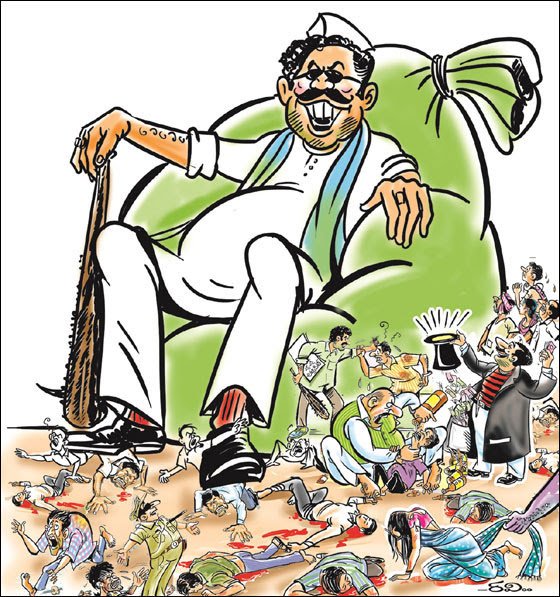
The ECI has been actively tackling the pervasive issue of candidates with criminal backgrounds, popularly called ‘history-sheeters’. In August 1997, utilizing its constitutional power (Article 324), the Commission mandated that all candidates for Parliament and State Legislatures must file an affidavit detailing any prior convictions for offenses specified under Section 8 of the Representation of the People Act, 1951 (RP Act), which would trigger disqualification. The ECI clarified that a conviction by a Trial Court is sufficient for disqualification, regardless of whether the person has been released on bail pending appeal.
Recognizing serious flaws in the existing Section 8 of the RP Act—such as a convicted criminal with a 10-year sentence being disqualified for only six years and potentially contesting from jail during the last four years of his term—the Commission proposed two major reforms to the government:
- Simplified Conviction Rule: Any person convicted of any offense and sentenced to imprisonment for six months or more should be barred from contesting for a period equal to the sentence served plus an additional six years.
- Disqualification for Pending Trials: Any person charged by a competent court (i.e., the court has taken cognizance and framed charges) for an offense punishable with imprisonment for five years or more should be disqualified, even if the trial is pending.
The ECI argued that apex law-making bodies require members of integrity. Keeping out individuals who are facing trial for serious offenses is considered a reasonable restriction on their right to contest elections, justified by the greater public interest and the need to preserve the sanctity of the legislative houses.
In December 1997, the Election Commission (EC), led by CEC Dr. M.S. Gill, urgently requested an Ordinance to replace the “postal ballot” system with a “proxy” vote for approximately 25 lakh (2.5 million) armed forces personnel and diplomatic representatives. The Commission unanimously agreed this was the only effective method to ensure the full participation of these “service voters”. Under the proposed system, a service voter could authorize any adult family member, such as a wife, son, daughter, father, or mother to cast a vote on their behalf in their native place.
The necessity for this change stemmed from the severe logistic constraints of postal voting, which were exacerbated by the recent reduction of the minimum campaign period from 20 to 14 days. Dr. Gill highlighted that hardly 10 to 15 per cent of postal ballots reached returning officers in time, making the facility “only a facility on paper”. This failure resulted in the denial of franchise to most service personnel; out of 25 lakh service voters, only about 40,000 had managed to vote in the 1996 general elections. The EC noted that proxy voting was already prevalent in advanced democracies like the UK and France. The initiative, taken by Dr. Gill over the preceding year, was welcomed by defense personnel and major political parties like the BJP.